

How Cars went from driving Machines, to Machines to Keep Us From Driving.
I was 6 years old in 1987. The only cars around me then were well used. Grandpa didn't believe in buying a new car. It made a lot of sense back then. A car from 1970 and a car from 1980 weren’t that drastically different, at least not when they were running well. Features and options were only so prevalent. Power windows, cruise control, and air conditioning were luxuries; and while things like intermittent wipers were invented in the late 60’s, they still had just barely started to make it into everyday cars.
Then a shift happened in the mid 80’s. With the adoption of EFI, things started to show breadth beyond nameplate, fit/finish, and power. The advancement of the automobile was about to accelerate.
Designing cars in the mid to late 80’s must have felt novel. Coming off the gas crisis and stagflation of the Ford and Carter era, the economy was surging. The natural human and economic reaction to years of recession was excess. The digital era pushed innovation in a market that had, for the most part, remained fairly stagnant and uninspiring during the previous decade. Hair got bigger, skirts got shorter, and music got louder. While cars did not necessarily surge in size, their attitude followed suit, at least through the lens of nostalgia. Things shifted radically, and the slippery slope to where we are today began.
A top-of-the-line ‘84 Cavalier sales brochure shows options like intermittent wipers, along with other incredible features like coin storage, a mirror, EFI, and a...wait for it...optional push button digital LCD radio. Paging through a brochure for a Cadillac Eldorado doesn’t really show much variation, other than a lifestyle change. Sure, you arguably get a “better car”: a sunroof, lights in the sun visor, a leather sofa, automatic door locks, some more speakers, and joysticks to adjust the voluminous seats. But realistically, the feature set isn't that different. None of it does much for the driving experience itself; other than the 75hp power steering pump, and the massive displacement required to run it. The only difficult choice is choosing a handle to go with your CB Radio; perhaps Peter Dragon or Zipper Gripper. Otherwise, you could opt for the stereo with a 5-band graphic equalizer, perfect for dialing in the scintillating highs of Eddie Van Halen shredding it in Panama.
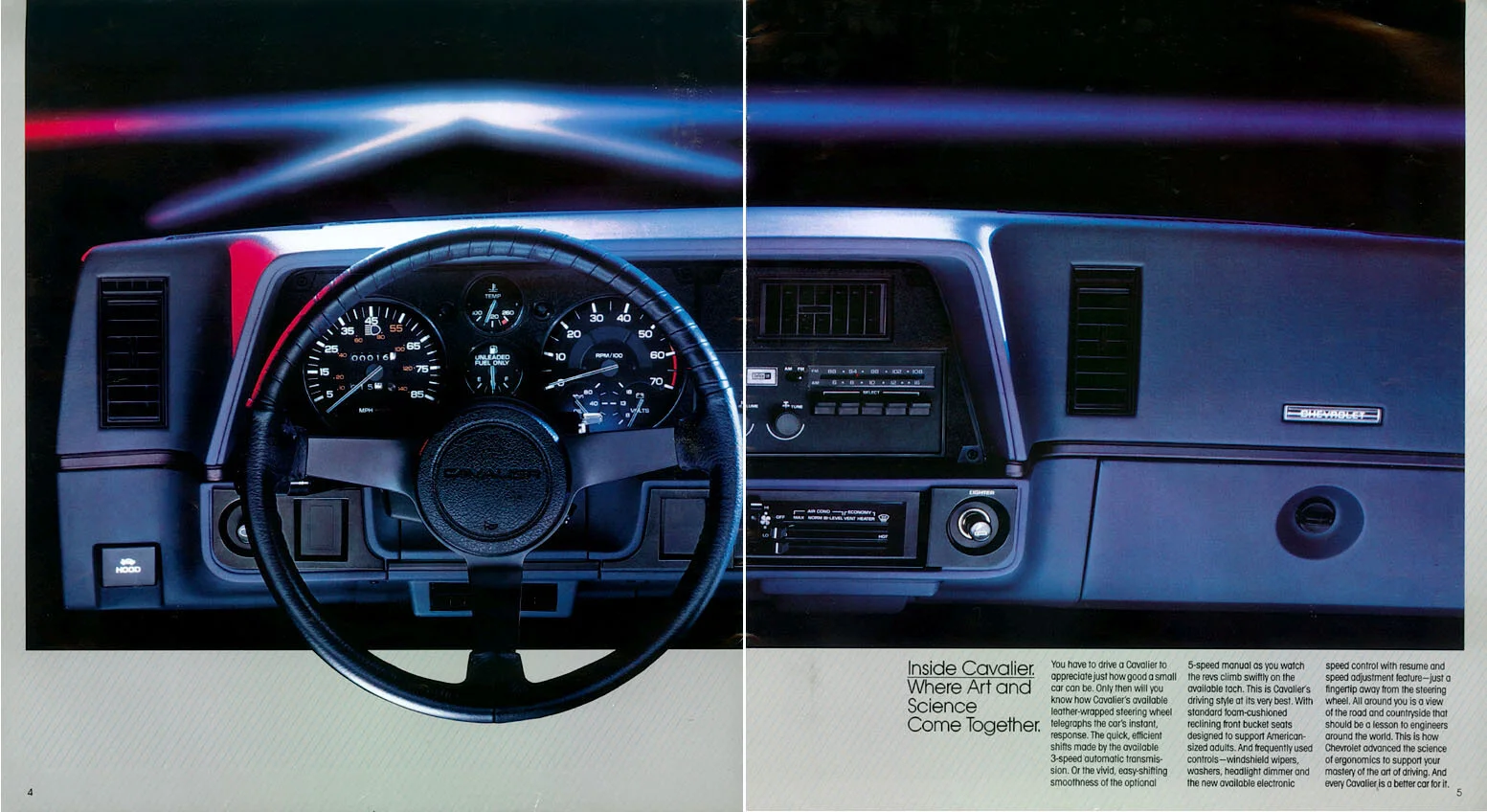
The 1984 Chevy Cavalier. Button count, not including the radio: 1.
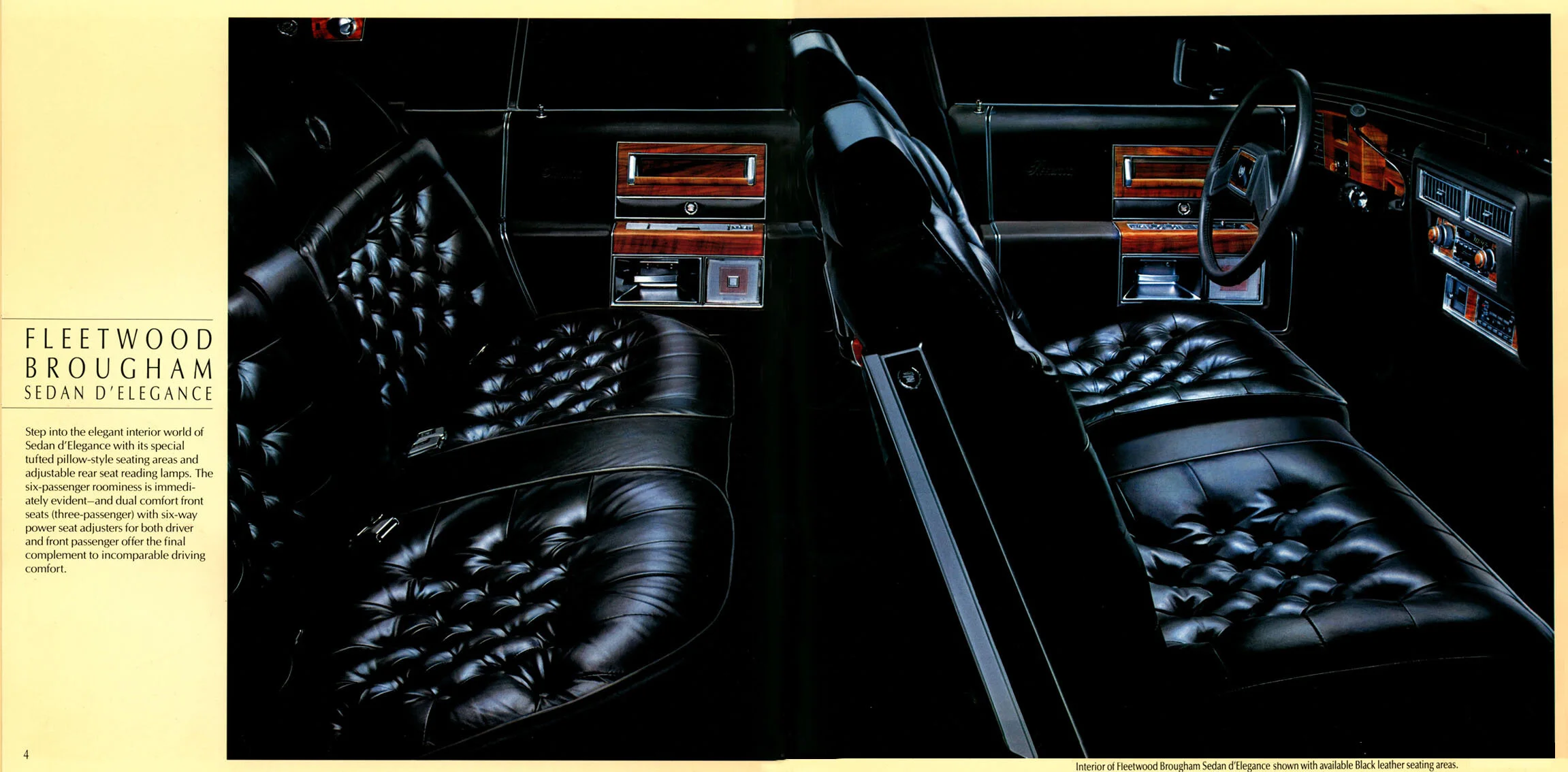
1988 Fleetwood Brougham Sedan D’Elegance. Advertised with amenities such as six way power seats and rear seat reading lamps.
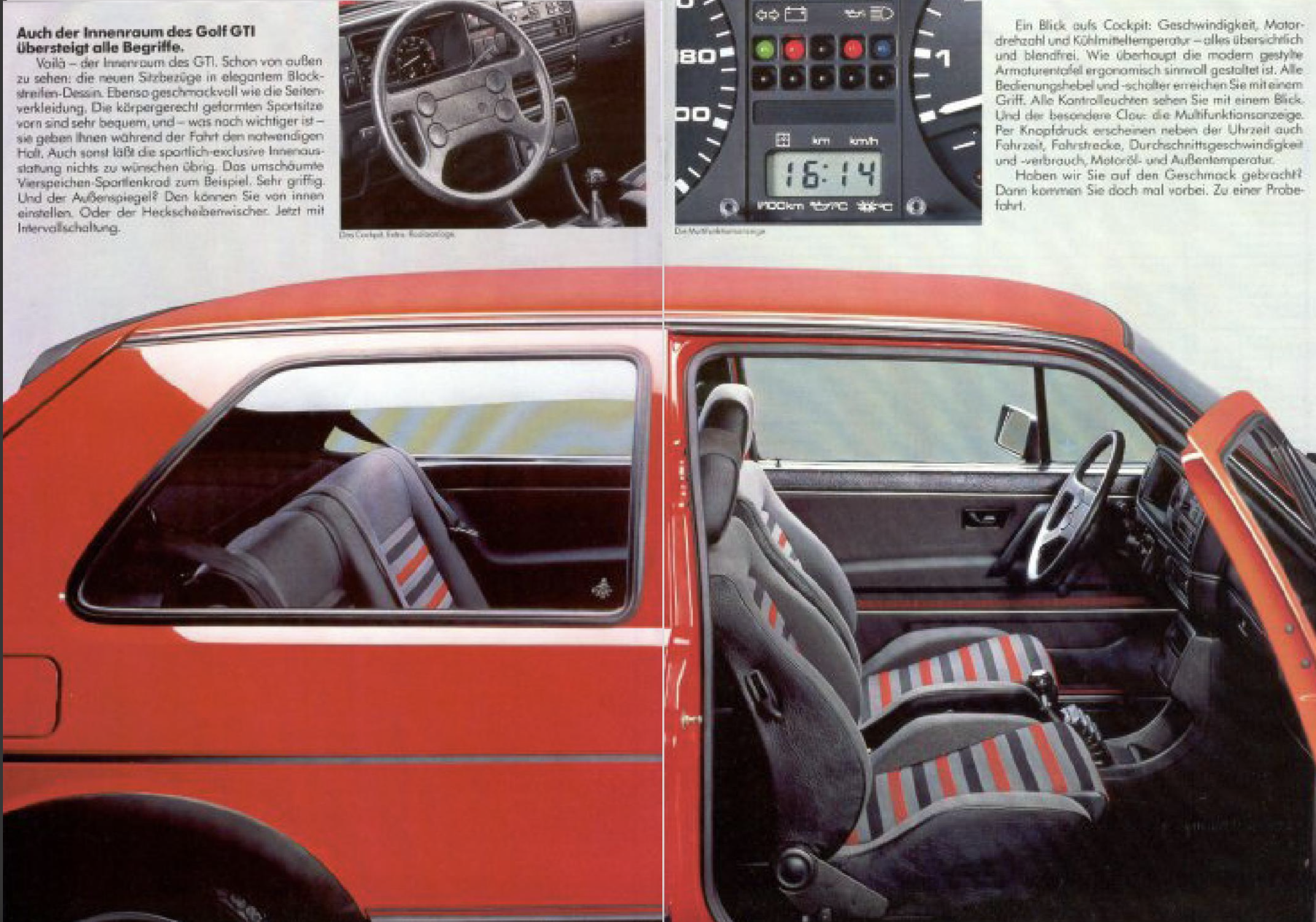
In the late 80’s and early 90’s few button oriented features were added. If you opted for the legendary crossflow 16v engine trim level, the VW GTI would come equipped with a multi-function computer. Your hot hatch could now, with the push of a button, tell you coolant temperature, oil temperature, and fuel economy as you Napoleonically ran the quad headlights up to the bumper of almost anything pedestrian. The late 90’s saw a resurgence of rain sensing wipers, with luxury manufacturers taking what was originally found in a 1970 Citroen SM and slapping them on windshields. Still, even as OBD-II diagnostics came in, and the power plants, transmissions, and their controllers continually got more complicated, the driver still had only a handful of buttons at hand. The fetish of the era for luxury and sports cars will still driving and trip data. In 1999 everything changed.
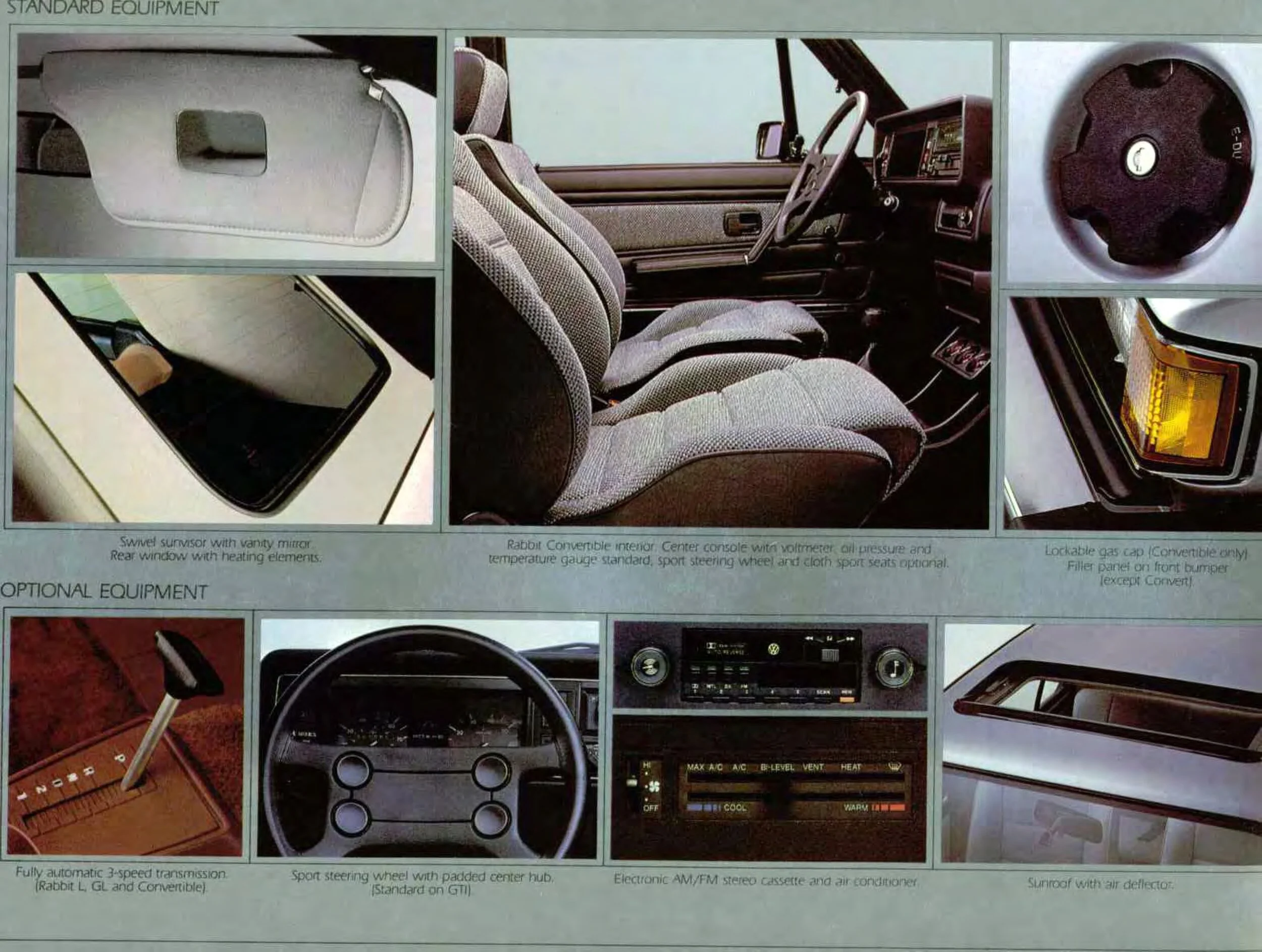
1983 VW Rabbit Interior
I drove a Lago Blue 1983 Volkswagen Rabbit to my high school graduation in ‘99. With manual mirrors, door locks and a hole where the radio should be, the only buttons the car had was rear window defrost, a hazard switch, and if you really stretch, the cold start fuel-advance on the injection pump. I didn’t have a cell phone so naturally there was only one thing to do if you were alone in that car. You drove. While I did nothing but pilot the least desirable car in the high school lot, the first consumer bluetooth device was launched. The bluetooth headset won “Best Technology Award” at Comdex in 1999; and, in 2000, Ericsson released the T36- the world’s first bluetooth enabled cellphone. It also boasted a 101 x 54 Monochrome display, tri-band GSM connectivity, WAP internet, and enough memory to store up to 1,000 other assholes in uConnect equipped period Chryslers that thought this was a good idea.
Since other manufacturers started coming on board with bluetooth in 2004, cars haven’t lagged much behind their smartphone counterparts. Predictably, as society has become more dependent on the smartphone, they’ve found it harder to do anything that decouples them from it. With the smartphone has come an entitlement mentality that technology must progress. Each phone must be faster, smarter, and more functional than the one before. The integration of the phone into our cars has, with total parity, blighted the experience.
Manufacturers, beholden to consumers and shareholders, march onwards, showing progress in every new model and model update. Every car is bigger, quieter, faster, more comfortable, and filled with more technology. They’re either more powerful, or more economical. There is always more of everything. And it must be so. Most technology is touted as making the car safer, with a better driving experience. But is it better? With the incremental slide since the early 2000’s, have we been slowly boiling to death? Have we irrevocably given ourselves over to progress? Who’s fault is it? Who is responsible for operating as the custodians for making sure that driving remains...driving? Is the answer really putting a giant phone that you need to stare at to operate in the center console?
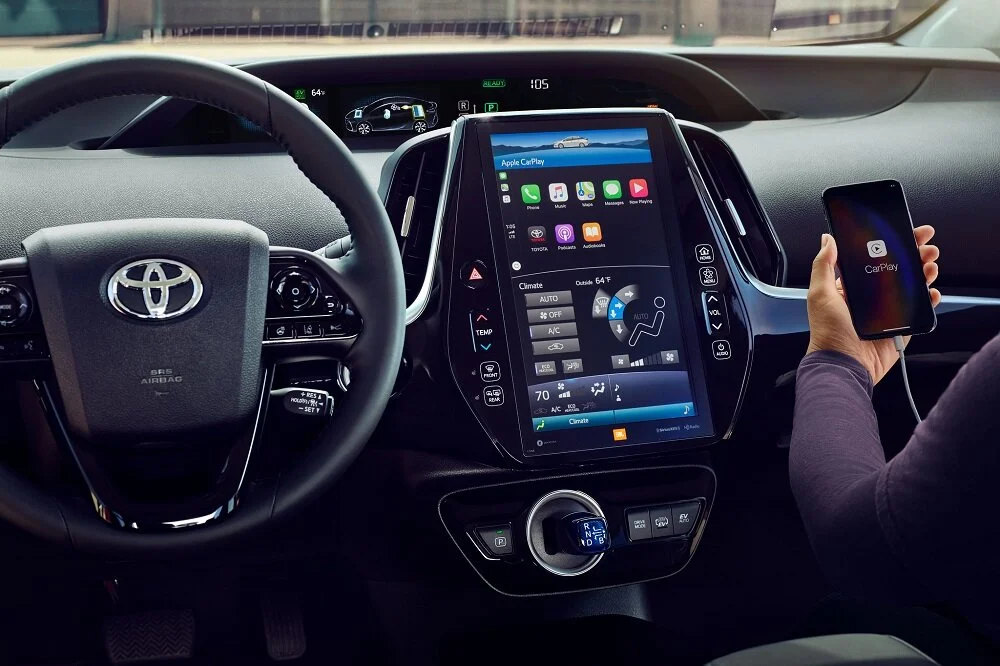
2020 Toyota Prius, pictured with available use-your-phone-while-you-are-driving and see-it-from-space climate control options.
I called up a colleague of mine and opined: “This interior is a convoluted mess.” The response was forceful. “This is just how things are now. All new cars are like this.” he scolded. I needed to just accept the status quo. I was in a 2020 Genesis. I sat there in napa leather seats, gripping a heated steering wheel while cool air flowed up past my testicles. In the windshield display the speed read 65 mph- an okay speed for the stated speed of 55 mph I saw on a little sign to the right. The car, superimposed in the heads-up-display was flanked by two diagonal lines. The cruise control, set at a slightly more irresponsible 75 mph, was adapting to the car in front of me, keeping a safe distance. Over the bluetooth connection I blamed ourselves. “Aren’t we, as journalists, supposed to be the ones that are honest about this stuff, rather than accept it as the new norm?” I asked. “Should we not hold manufacturers and consumers accountable?” It didn’t work in middle school when I told my grandmother: “Well my other friends have cable TV, and stay up till 10pm.” The response was always. “Well we aren’t other people. We do things differently.” The same goes for manufacturers. Bold moves should be rewarded, even when things don't necessarily work. We, as journalists and consumers should never accept what we’re given. We should challenge the status quo.